The Evolution of Libera LLRF: From First Deployment to X-band
The latest extension of Libera LLRF to X-band marks another milestone in the evolution of our digital RF control system. Behind this achievement lies more than fifteen years of continuous development driven by accelerator projects with increasingly demanding RF requirements. This article looks back at the key technical milestones that shaped Libera LLRF into the system it is today.
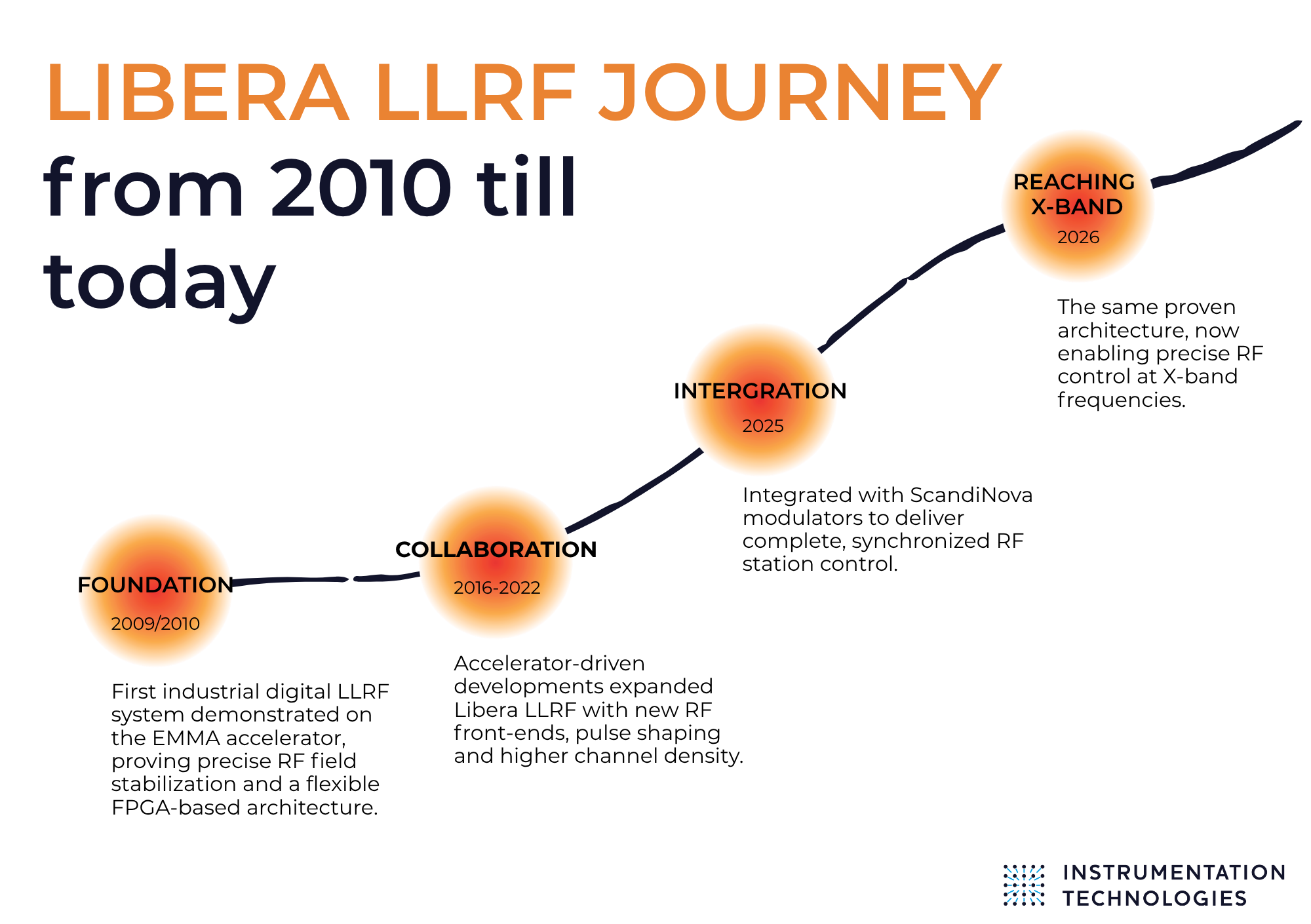
FOUNDATION
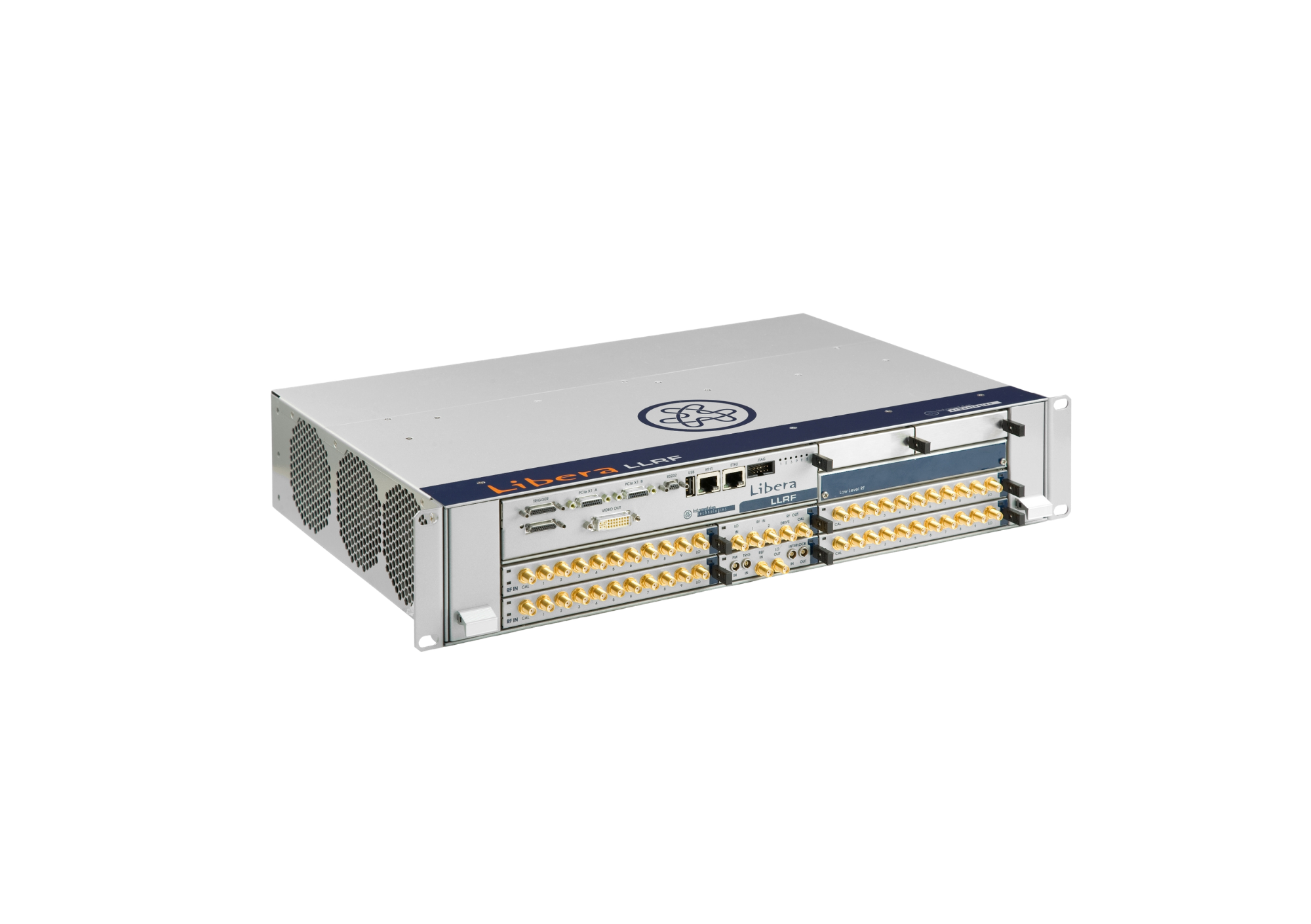
Libera LLRF was originally developed as a fully digital low-level RF control system for particle accelerators requiring precise regulation of RF amplitude and phase. Based on a low-latency FPGA processing architecture, the system integrated amplitude and phase feedback, vector-sum control, RF system diagnostics, automatic vector-sum calibration, cavity tuning and machine protection within a configurable hardware and software framework.
Rather than being designed for a single accelerator, the system adopted a flexible architecture supporting both CW and pulsed operation, different RF frequencies and RF system topologies ranging from a single transmitter and cavity to configurations with up to 32 cavities per transmitter.
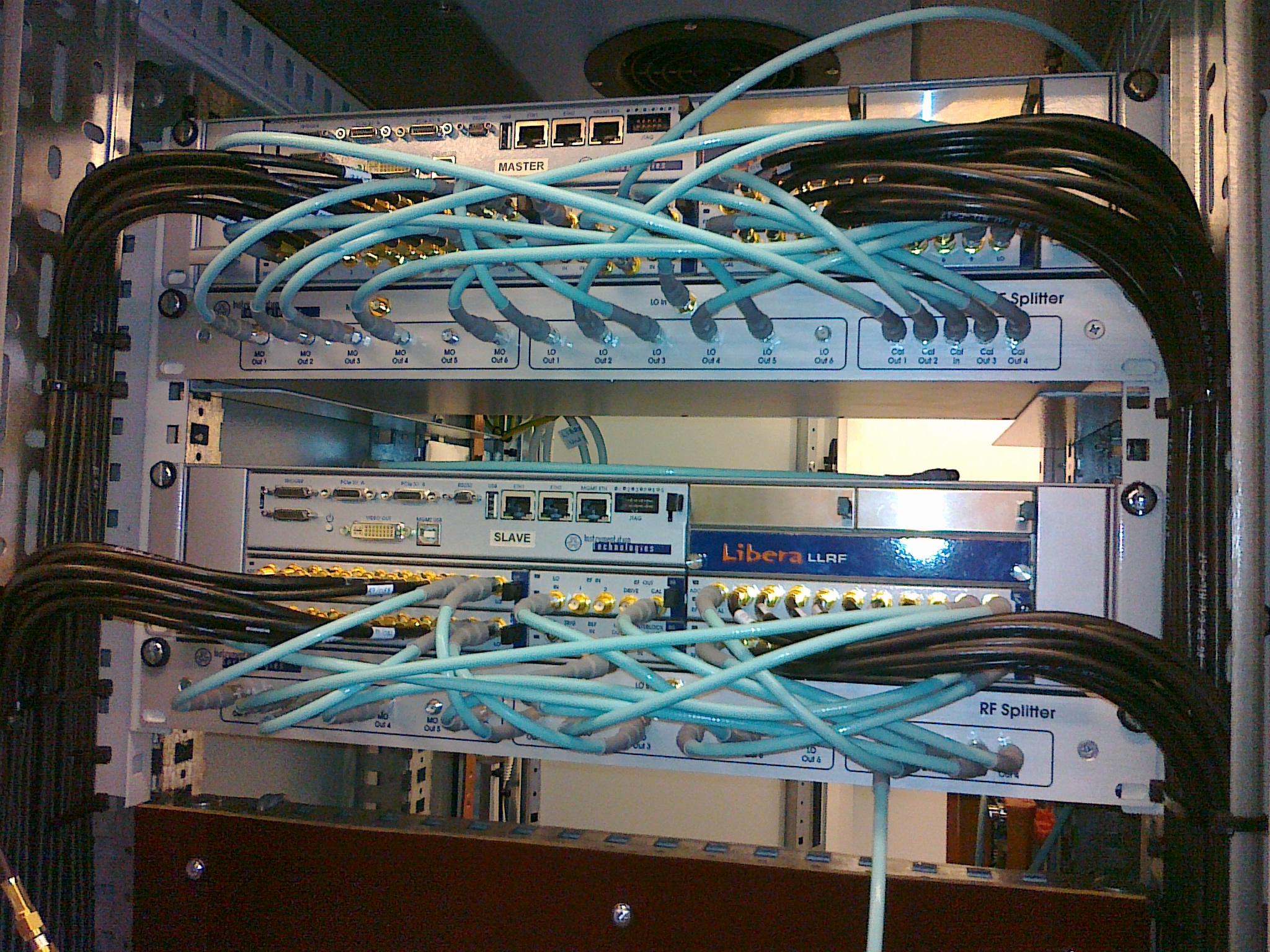
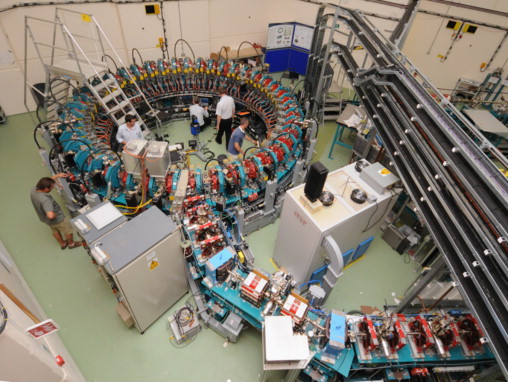
One of the first major demonstrations was carried out at STFC Daresbury Laboratory on the EMMA RF system. During high-power tests, Libera LLRF controlled two 1.3 GHz copper cavities at a peak IOT power of 10 kW, achieving 0.005% RMS amplitude stability and 0.008° RMS phase stability. The subsequent EMMA system was required to operate over a 5.5 MHz frequency range relative to the 1.3 GHz ALICE injector while maintaining the phase relationship between the two machines through trigger-by-trigger synchronization.
The successful tests led to the delivery of the first Libera LLRF system, which was installed on EMMA. This first deployment demonstrated not only the performance of the Libera LLRF hardware, but also the versatility of its architecture—an approach that would continue to shape the system through subsequent collaborations with leading accelerator laboratories.
Andy Moss, STFC: »we tested the LLRF prototype system on-site at DL at 1.3 GHz and 3.9 GHz all in the same night, this led to the first ITECH LLRF system installed on EMMA, it was a huge success and not without its difficulties but a testament to the professionalism of your company.«
GROWING WITH ACCELERATOR REQUIREMENTS
One of the most important milestones came through the ELI-NP Gamma Beam System. Working closely with INFN-LNF, Instrumentation Technologies modified the Libera LLRF system to meet the project’s demanding functional and stability requirements.
To achieve the required RF stability, the RF front-end was redesigned as a separate, precisely temperature-stabilized unit to compensate for long-term thermal drift. The same architecture supported both the 2.85 GHz S-band and 5.7 GHz C-band systems. The signal-processing functionality was also extended with independent amplitude and phase control and arbitrary pulse-shape generation, an important capability for compensating beam loading during multi-bunch operation.
Both versions, S-band and C-band Libera LLRF systems were successfully tested and delivered. The project demonstrated how a common hardware and software architecture could be adapted to different RF frequency bands and accelerator stations while maintaining the required level of field stability.
The system continued to evolve through later accelerator projects. For the APS LINAC upgrade at Argonne National Laboratory, a new version of Libera LLRF was developed to replace the existing analogue LLRF controllers.
This generation introduced upgraded FPGA technology, support for up to 22 RF input channels through two temperature-stabilized RF front-ends and additional functionality for RF control, monitoring and diagnostics.
The project represented another significant step in the development of Libera LLRF toward higher channel density, improved processing capabilities and greater operational flexibility.
COLLABORATION WITH SCANDINOVA
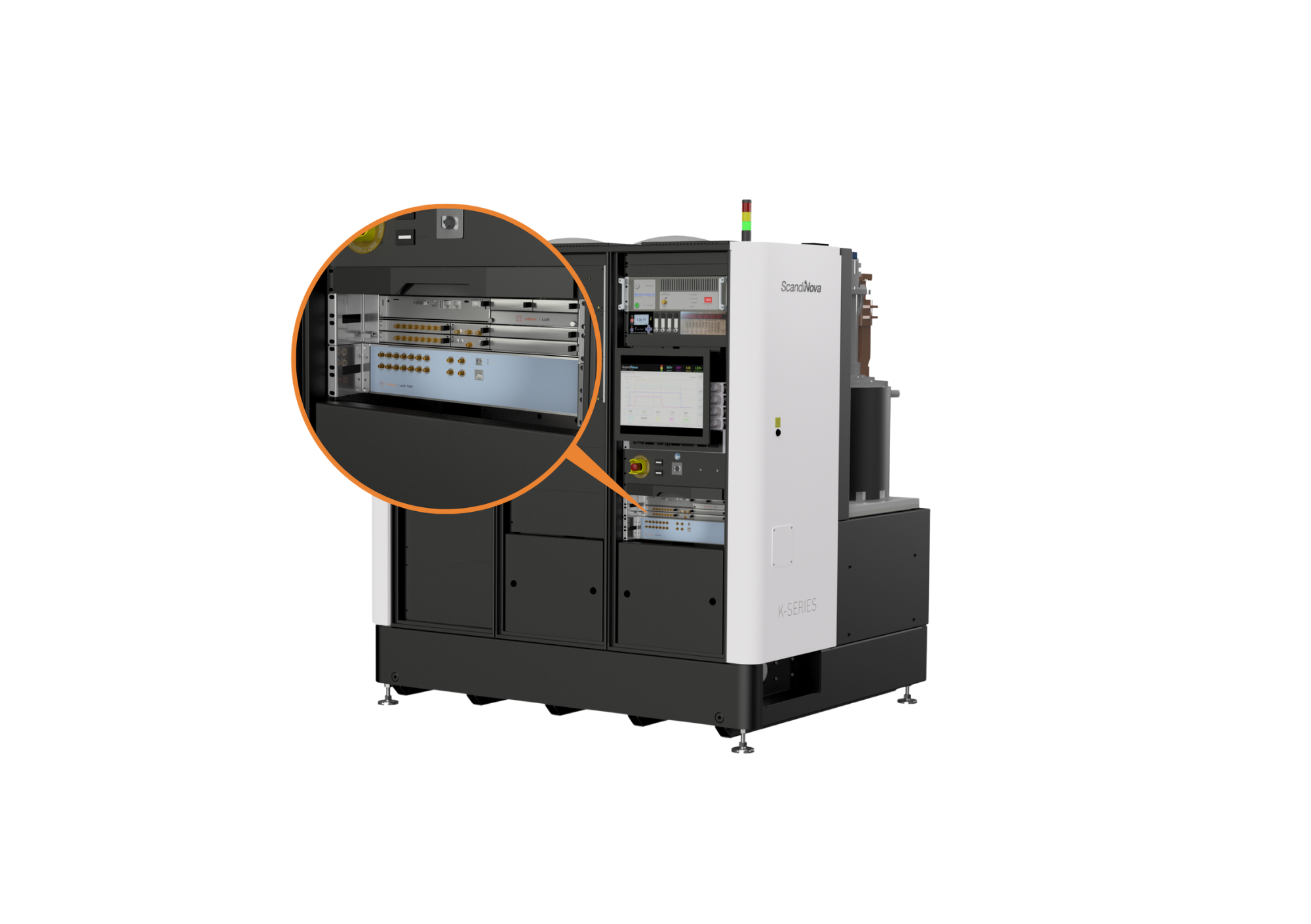
Through our collaboration with ScandiNova, Libera LLRF became part of a fully integrated RF solution, combining digital RF control with high-voltage solid-state modulator technology.
The solution enables tightly synchronized operation between the RF source and the accelerating structure while simplifying system integration for accelerator facilities.
The collaboration demonstrates the flexibility of the Libera LLRF system and its ability to integrate with complementary accelerator technologies, supporting complete RF solutions rather than individual subsystems.
“This launch is a great example of what long-term collaboration and shared engineering ambition can achieve,” said Anders Larsson, Head of Key Account & Product Management at ScandiNova. “By integrating Instrumentation Technologies’ Libera LLRF into our RF unit platform, we’re giving customers a reliable, high-performance solution that’s ready for immediate operation.”
EXTENDING THE LLRF SYSTEM TO X-BAND FREQUENCY
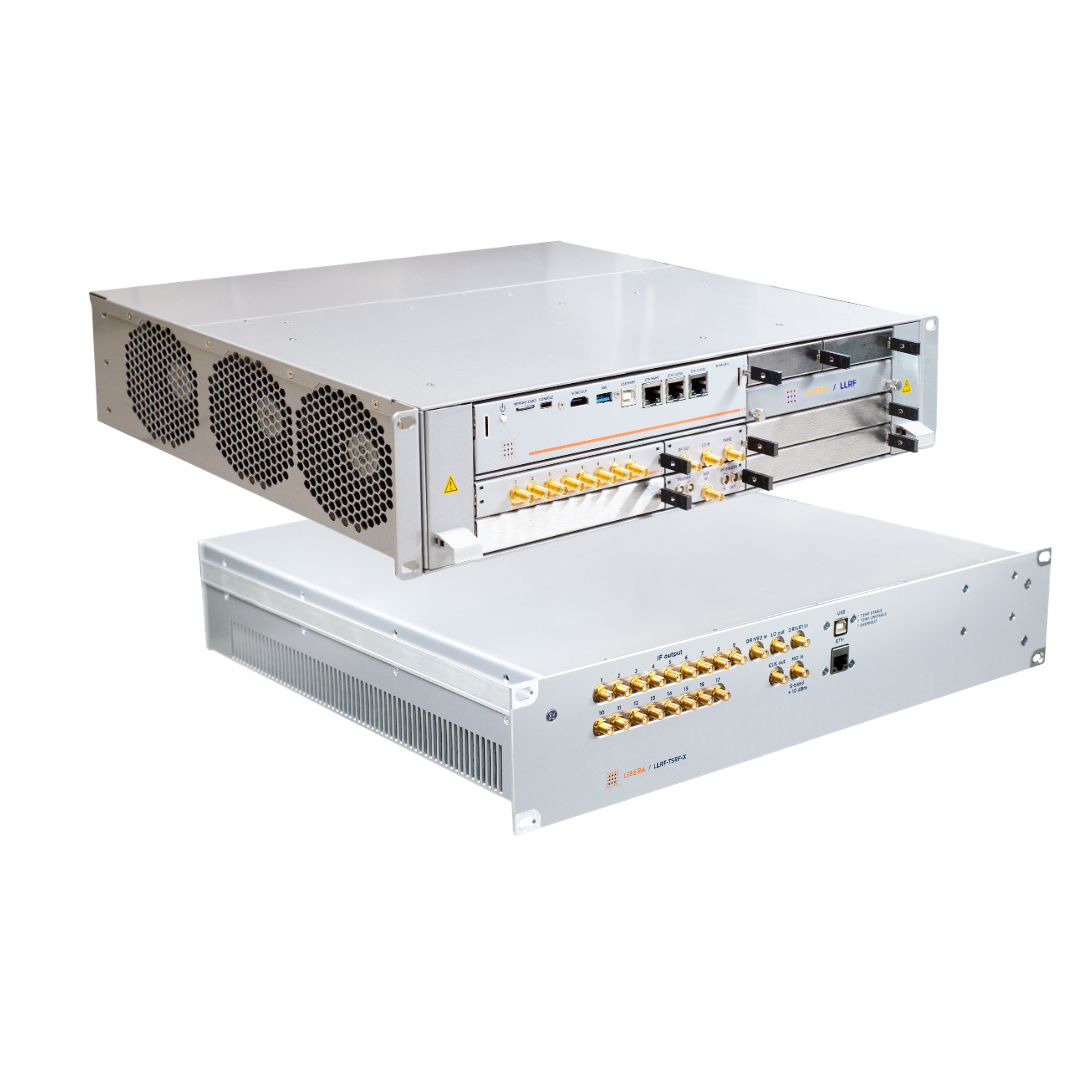
The latest evolution of Libera LLRF addresses one of today’s most demanding RF control applications working at x-band frequency.
Building on the existing Libera LLRF architecture, the X-band system combines a temperature-stabilized RF front-end with ultra-low added amplitude and phase noise, 16-bit 250 MS/s FPGA-based signal processing, configurable feedback and feed-forward algorithms, and programmable amplitude and phase pulse shaping with rise times below 20 ns. The system also incorporates advanced pulse diagnostics, remote operation capabilities and flexible integration with accelerator control systems.
Today, these developments culminate in a commercially available X-band solution, extending the Libera LLRF system into a new frequency range while preserving the same architecture, software environment and operational philosophy already proven across numerous accelerator facilities.
Relevant papers if you are interested in deep diving into the LLRF Topic:
Read more on X-band developments:
- https://indico.jlab.org/event/939/contributions/17410/
- https://meow.elettra.eu/81/pdf/TUPS009.pdf
- https://www.i-tech.si/wp-content/uploads/2026/07/EVALUATION-OF-AN-X-BAND-LLRF-PROTOTYPE-FOR-THE-EUPRAXIA@SPARC-LAB-LINAC.pdf
Read more on Scandinova integration:
For full archive of papers about Libera LLRF visit product page here.
